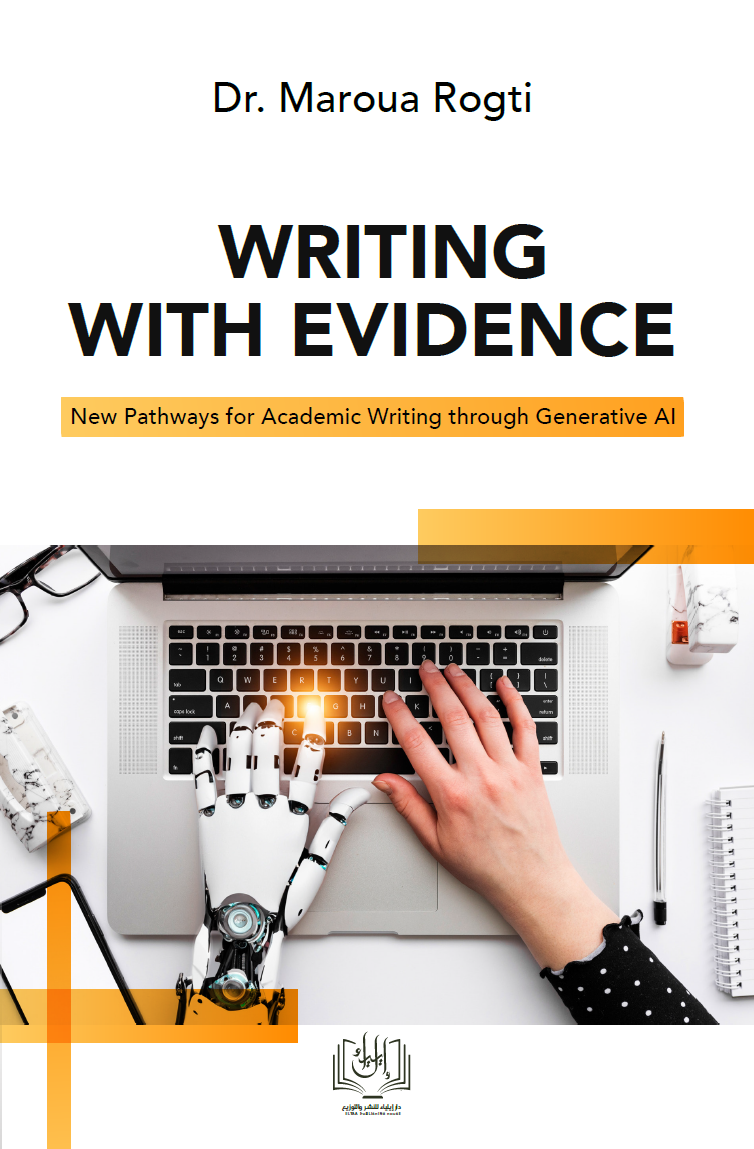
Writing with Evidence: New Pathways for Academic Writing through Generative AI
-
الفئة :
كتب علمية -
الإسم الكامل للمؤلف (ين):
Dr. Maroua Rogti -
الرقم الدولي المعياري للكتاب (ISBN) :
978-9969-05-680-8 -
عدد الصفحات :
286 -
الميدان :
لغات أجنبية
: ملخص
Generative artificial intelligence systems can produce coherent prose, summarize bodies of literature, generate code, or draft experimental designs, and it is changing how ideas are formed, how drafts are produced, and how arguments are assembled. This book is addressed to educators, librarians, research leaders, and institutional decision makers who want to respond to these developments thoughtfully. It aims to be practical rather than polemical: not a manifesto about whether AI is good or bad, but a pragmatic guide for preserving and strengthening the core aims of education and scholarship, namely, to learn how to reason, weigh evidence, and communicate with integrity, while recognizing that the tools available to do those things are changing
الفهرس :
Part I. Foundations of Academic Writing in the Digital Era
Chapter 1: The Evolution of Academic Writing
Chapter 2: The Age of Artificial Intelligence in Education
Chapter 3: Academic Integrity and the AI Dilemma
Part II. AI Tools for Academic Writing
Chapter 4: Generative AI and Writing Support Systems
Chapter 5: Metacognitive Scaffolding in the Age of AI
Chapter 6: Automation in Literature Discovery, Data Visualization, and Reproducible Reporting
Chapter 7: Curriculum, Assessment, and Faculty Development for AI Aware Academic Writing
Chapter 8: Institutional Governance, Policy, and the Road Ahead
Chapter 9: Looking Forward: Research Priorities, Policy Horizons, and Ethical Imperatives
Chapter 10: Conclusion: Toward Responsible, Generative-Aware Scholarship
Chapter 11: Practical Toolkit: Templates, Checklists, and Sample Artifacts
Chapter 12: Case Studies, Pilots, and Lessons from Early Adopters